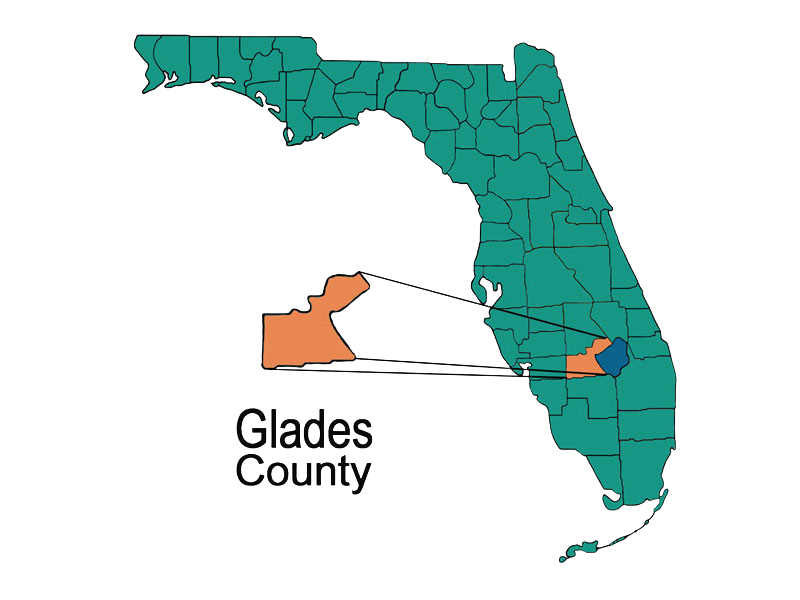
Glades County is one of those places where, the moment you arrive, life seems to slow down. The roads stretch long and straight, the prairies open wide, and the sky feels even bigger than usual. It’s the kind of Florida that people often miss when they only visit the beaches — the old, rural heart of the state.
Long Before There Were Towns
If you could travel back in time a few thousand years, you’d find people already living here along the creeks, prairies, and the edge of Lake Okeechobee. One of the most fascinating places is Fort Center, an ancient Native American site near Fisheating Creek. People lived, farmed, and built earthworks there for centuries. These were communities that understood the land deeply — how to fish the creeks, when to plant crops, and how to travel the waterways long before roads existed.
A Land Shaped by Water
Water is the big storyteller in Glades County. The edge of Lake Okeechobee forms part of the county, and Fisheating Creek twists through the landscape like a secret river. These waterways shaped everything — where people lived, how they traveled, what they ate, and later, how farms and ranches grew.
The name “Glades County” might make you think of swamps, but most of the land here is actually prairie, pine woods, and open ranch land. It’s Florida’s inland frontier — quieter, dryer, and wide open.
Ranching, Farming & Big Skies
When settlers arrived in the 1800s and early 1900s, they found a land perfect for cattle and farming. Ranchers put down roots, families built homesteads, and the community grew around hard work, land, and livestock. Even today, you can drive for miles and see cattle grazing under the shade of live oaks or standing in tall grass that ripples like waves.
Agriculture is still a huge part of life. Farms, pastures, and open fields give Glades County a peaceful, spacious feel that many visitors aren’t expecting.
Becoming Glades County
Glades County officially became its own county in 1921, with Moore Haven as the county seat. Moore Haven has always been a small town, but it’s an important one — sitting right by Lake Okeechobee, watching storms, sunshine, and visitors come and go for more than 100 years.
Culture, Community & “Old Florida” Traditions
Every place has its traditions, and Glades County has some that feel especially rooted in its history.
Chalo Nitka Festival — This annual festival in Moore Haven brings the whole community together. There’s a parade, food, music, and a rodeo. It originally began in the 1940s and is still going strong. It celebrates local history, agriculture, and Native American heritage.
Brighton Seminole Reservation — Part of the county’s cultural heartbeat comes from the Seminole Tribe. The Brighton Reservation is home to a living, active community, and it’s a reminder that Native history here isn’t just ancient — it continues today, in the people, stories, and traditions that are very much alive.
Rural pride — The people of Glades County tend to value land, family, tradition, and community. It’s the kind of place where folks still wave when they pass you on the road and where history isn’t just in books — it’s in the way people live.
What It All Adds Up To
When you put all these pieces together — the ancient sites, the big waters, the ranches, the small towns, and the living Native culture — Glades County becomes something special.
It’s a place where:
nature feels close,
history goes back far beyond written records,
traditions still matter, and
community ties run deep.
Glades County is “old Florida” in the best sense — peaceful, grounded, and full of stories if you know where to look.