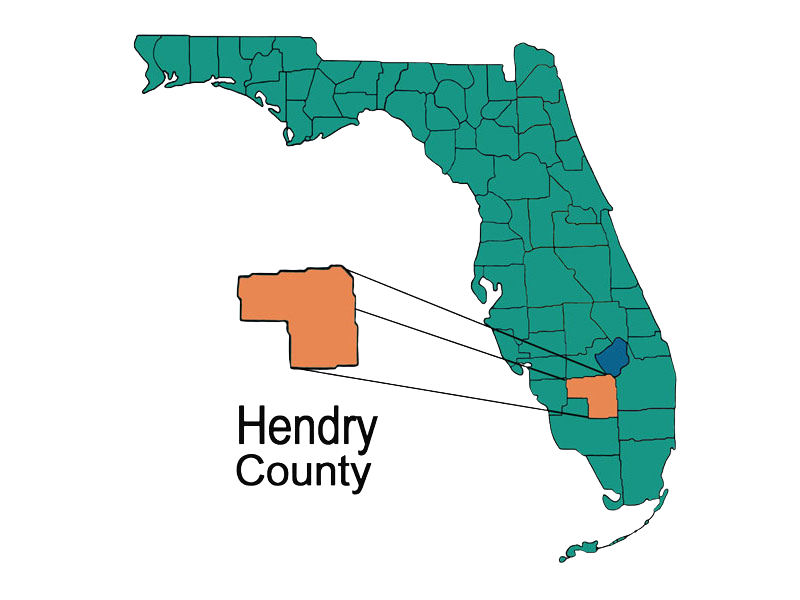
If you’ve ever driven through Hendry County, you’ll notice right away that it feels like the kind of place where wide fields, quiet towns, and hardworking people set the tone. It’s rural, it’s agricultural, and it carries a deep sense of Florida’s past—long before theme parks and skyscrapers came along.
Let’s wander through its story.
Before There Was a County
Long before Hendry County had a name, the land was home to Indigenous peoples, especially groups connected to the Seminole and Miccosukee. The region—full of wetlands, prairies, and thick vegetation—supported hunting, fishing, and small settlements. Even today, Hendry County still shares space and history with Seminole communities, and you can feel that cultural presence in local place names, stories, and traditions.
Ranches, Riverboats & Early Settlers
In the 1800s, settlers started making their way into what’s now Hendry County. The Caloosahatchee River became a kind of lifeline—it was the highway before there were highways. Small towns like LaBelle grew up along its banks.
Life back then was rugged. Cattle ranching was huge—this whole part of Florida was “Cracker Country.” People worked with the land, moved cattle through open prairies, and relied heavily on neighbors. That rural, tight-knit feeling is something Hendry County still carries.
There weren’t many luxuries, but there was a strong sense of community and a lot of pride in being self-reliant.
The Birth of the County (1923)
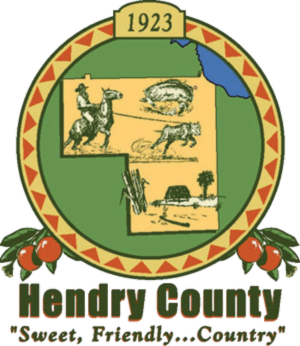
Hendry County officially became a county in 1923, carved out of Lee County. It was named for Captain Francis A. Hendry, often called the “Cattle King of South Florida,” who helped shape the region’s early ranching economy.
This was a time when railroads were coming in, new farms were sprouting up, and small towns were starting to take root.
Agriculture, Agriculture… and More Agriculture
If you want to understand Hendry County, start with one word: agriculture.
The soil and climate made it a prime area for:
Sugarcane (a massive part of the economy)
Citrus groves
Vegetable farms
Cattle operations
The area around Clewiston even became known as "America’s Sweetest Town" because of the U.S. Sugar operations. Sugarcane fields stretch for miles—you can smell the harvest season, and locals know the signs of the sugar mills running at full steam.
Working the land isn’t just a job here; it’s a way of life passed down through families. Agriculture shapes everything: the rhythms of the year, the local festivals, the economy, and the culture.
Rural Life & Community Culture
Hendry County still has that rural Florida feeling—friendly people, small-town traditions, and a pace of life that’s calmer than anything you’ll find on the coast.
Hendry County Today
Even though development has touched the region, Hendry County still feels like a place where Florida’s rural roots are alive and well. Sugarcane still sways in the fields, small towns keep their traditions, and the blend of Indigenous history, ranching heritage, and agricultural life gives the county a personality all its own.
It’s one of those places that reminds you Florida isn’t just beaches and palm trees—it’s also farms, river towns, and communities built on decades of shared history.